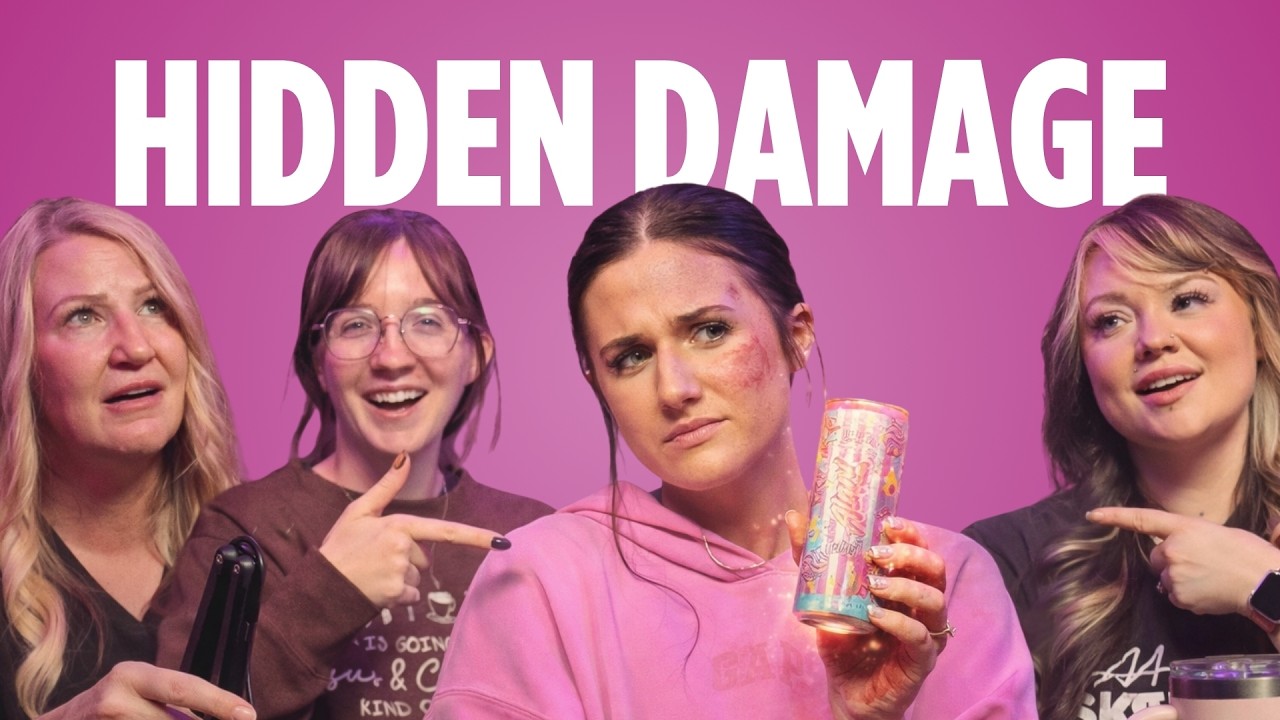
S3E2: What Sugar Is Actually Doing to Your Skin (And Your Hair) — A Straight Talk From Your Estheticians
S3E2: What Sugar Is Actually Doing to Your Skin (And Your Hair) — A Straight Talk From Your Estheticians
Nobody wants to hear it. But your esthetician is going to tell you anyway.
On Season 3, Episode 2 of AA Skin Babes Unfiltered, Lena, Georgia, Kristin, and Shelby sat down to talk about one of the most overlooked drivers of skin and hair problems they see in the treatment room every week: sugar. Not a lecture. Not a diet plan. Just the honest, unfiltered breakdown of what excessive sugar consumption is actually doing to your skin — and what you can do about it without giving up everything you love.
The Broken Belief: Sugar Only Affects Your Waistline
Most people know sugar isn’t great for them. But the assumption is usually that the damage is limited to weight gain or energy crashes.
What the team at Amazingly Ageless sees in the treatment room tells a different story. Sugar affects your skin, your hair, and your body’s ability to heal — and most clients never connect the dots between what they’re eating and what they’re seeing in the mirror.
Georgia put it plainly: “I think people just assume it’s going to make you gain weight, it’s going to affect your waistline, but it can actually do a lot more than that.”
The Strategic Reframe: Your Skin Is a Report Card for What’s Happening Inside
Here’s the principle the team comes back to again and again: whatever’s happening inside your body is showing up on the outside.
Puffiness? That’s inflammation. Persistent redness? Inflammation. Breakouts that won’t clear even with a solid skincare routine? Inflammation. And sugar — especially processed sugar and artificial sweeteners — is one of the most consistent drivers of systemic inflammation.
The 80/20 rule applies here: 80% of your skin results come from what you’re doing at home and what you’re putting in your body. The treatment room accounts for 20%. As Kristin said, “What you’re doing at home is just as important, if not more important, than what we’re doing in the treatment room — because we’re seeing you once a month, once every six weeks.”
The Tactical Breakdown: What Sugar Actually Does
Glycation — The Mattress Analogy
Georgia explained glycation the way she explains it to clients: think of your skin’s collagen and elastin like the springs in a mattress. Spa treatments, retinol, and good skincare are softening those springs — keeping them supple and resilient. When you overconsume sugar, glycation occurs: sugar proteins attach to those springs and harden them. They stop working the way they should.
Short term: inflammation, acne, redness.
Long term: accelerated aging. The collagen and elastin that keep skin firm and smooth become stiff and brittle — and that process compounds every year as natural collagen production already declines with age.
Hair Follicles: The First Warning Sign
Shelby brought up a point most people don’t consider: hair follicles are among the fastest-dividing cells in the body, which means they require a constant supply of nutrients, oxygen, and stable blood sugar to function properly. When something is metabolically off, hair is often the first place you see it — dullness, brittleness, breakage, and loss.
Glycation affects hair too. Because hair is made of a protein called keratin, glycation weakens the keratin structure, making hair more prone to breakage and bond damage.
Free Radicals — The “Buzz Balls” in Your Skin
Kristin’s explanation: sugar increases oxidative stress, which means your body produces more free radicals than it can neutralize. She calls them “buzz balls” — they’re not neutral, so they sit in the skin and buzz, driving inflammation. That inflammation causes acne, redness, broken capillaries, and accelerated aging.
The fix isn’t just cutting sugar. It’s neutralizing the damage with antioxidants. That’s why the team recommends products like the Maestro and Alto — formulated with 14 antioxidants specifically to neutralize free radicals and calm inflammation in the skin. And vitamin C is key, but form matters: the wrong form of vitamin C can actually make redness worse.
Alcohol: The Hidden Sugar Source
The team flagged one that catches people off guard: alcohol is very high in sugar. That post-night-out feeling — the puffiness, the dull skin, the dehydration — isn’t just from the alcohol itself. It’s the sugar load combined with dehydration.
What to Actually Do About It
The team was unanimous: they’re not telling you to cut out sugar completely. That’s not realistic, and it’s not sustainable. Georgia admitted she’d been eating her dad’s frozen cookie dough for two nights running. Lena acknowledged her multiple-coffees-a-day habit. The point isn’t perfection.
Practical steps from the episode:
- Drink more water — Especially if you’re eating sugar-heavy. You need to flush the toxins. Kristin’s tip: add a pinch of pink salt to your water so your body actually absorbs it instead of running straight through.
- Reduce, don’t eliminate — Cut back on the obvious sources: soda, sports drinks (which are either high in sugar or high in sodium), flavored coffees. Even cutting from six sodas a day to two is a meaningful change.
- Watch the hidden sources — Alcohol, sports drinks, electrolyte powders, and “healthy” options like fruit juice and flavored yogurt all carry significant sugar loads.
- Add antioxidants — Both in your diet and in your skincare. Vitamin C (the right form), the Maestro, the Alto. These neutralize the free radical damage that sugar creates.
- Be consistent for 21 days — It takes 21 days to build a habit. A two-week sugar reduction that you abandon means your same problems come back. Find a level of reduction you can actually sustain.
- Consider a dietitian — Kristin mentioned that many insurance plans cover dietitian visits fully. If your skin issues are persistent and you suspect diet is a factor, a professional can help you identify the specific triggers.
The Authority Signal: What We See in the Treatment Room
Kristin shared something she observes clinically: in clients with high sugar consumption — particularly diabetics — glycation can be visible on the skin as a kind of crust on the outer layer. It’s difficult to address topically because the damage is happening structurally.
The treatments that help most: microneedling (to stimulate collagen remodeling), antioxidant-rich products, and consistent professional facials. But as the team emphasized, those treatments are working against a tide if the diet isn’t addressed.
For teen clients especially, the team often sees dramatic skin improvement just from swapping soda for water after school. The skin’s response to reduced sugar intake can be visible within weeks.
This is the conversation your esthetician has been wanting to have with you. Watch the full episode here: ▶ Watch the Full Episode on YouTube
