Licensed Estheticians React to Viral TikTok Waxing Fails — And the "Morning Shed" Trend That's Burning Skin
Licensed Estheticians React to Viral TikTok Waxing Fails — And the “Morning Shed” Trend That’s Burning Skin
TikTok skincare content gets millions of views. Some of it is genuinely helpful. A lot of it is causing real damage to real people’s skin.
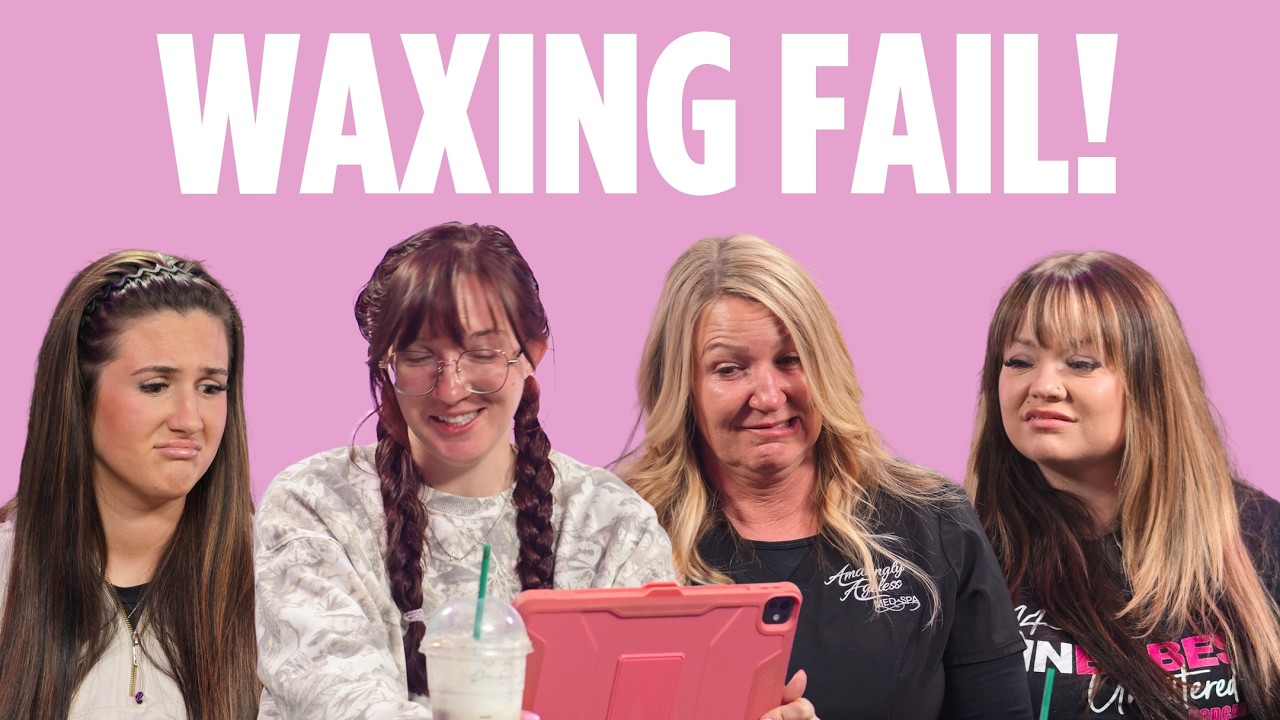
On this episode of AA Skin Babes Unfiltered, Lena Dolbow, Kristin Sandborn, Georgia Davenport, and Shelby Ayres reacted to some of the most viral at-home waxing fails and questionable skincare trends circulating online.
At-Home Waxing: What’s Actually Going Wrong
The soft wax thickness problem
The most common at-home soft wax mistake: applying it too thick. Soft wax is designed to be paper-thin. When it’s applied too thick, the strip can’t adhere to the hair — it only grabs the top layer of wax.
The direction problem
Wax goes on in the direction of hair growth. It comes off against it. This is the fundamental rule of waxing, and it’s the one most people get backwards when they try it at home.
The temperature problem
If your wax is steaming, it’s too hot. Full stop. Applying wax that’s too hot to sensitive areas like armpits or the face will lift skin. Always test on your forearm first.
Post-wax histamine reactions
A first-time wax often produces a histamine reaction — redness, raised bumps, sensitivity. This is normal and typically resolves within a few hours. An antihistamine and aftercare oil will help.
The “Morning Shed” Trend: A Professional Warning
The “Morning Shed” trend involves sleeping in multiple layers of skincare — sheet masks, lip masks, eye patches, heavy occlusives — and peeling them all off in the morning.
The estheticians were unequivocal: do not do this.
Professional and active masks are formulated for specific contact times — typically 10 to 20 minutes. Leaving them on overnight dramatically increases the concentration of active ingredients on the skin, which can cause chemical burns, contact dermatitis, and barrier damage.
For acne-prone skin, the heavy occlusive layer traps bacteria and sweat against the skin all night. The result is often severe cystic breakouts that take weeks to resolve.
Want to watch the full reaction episode? Watch here: ▶ Watch the Full Episode on YouTube
